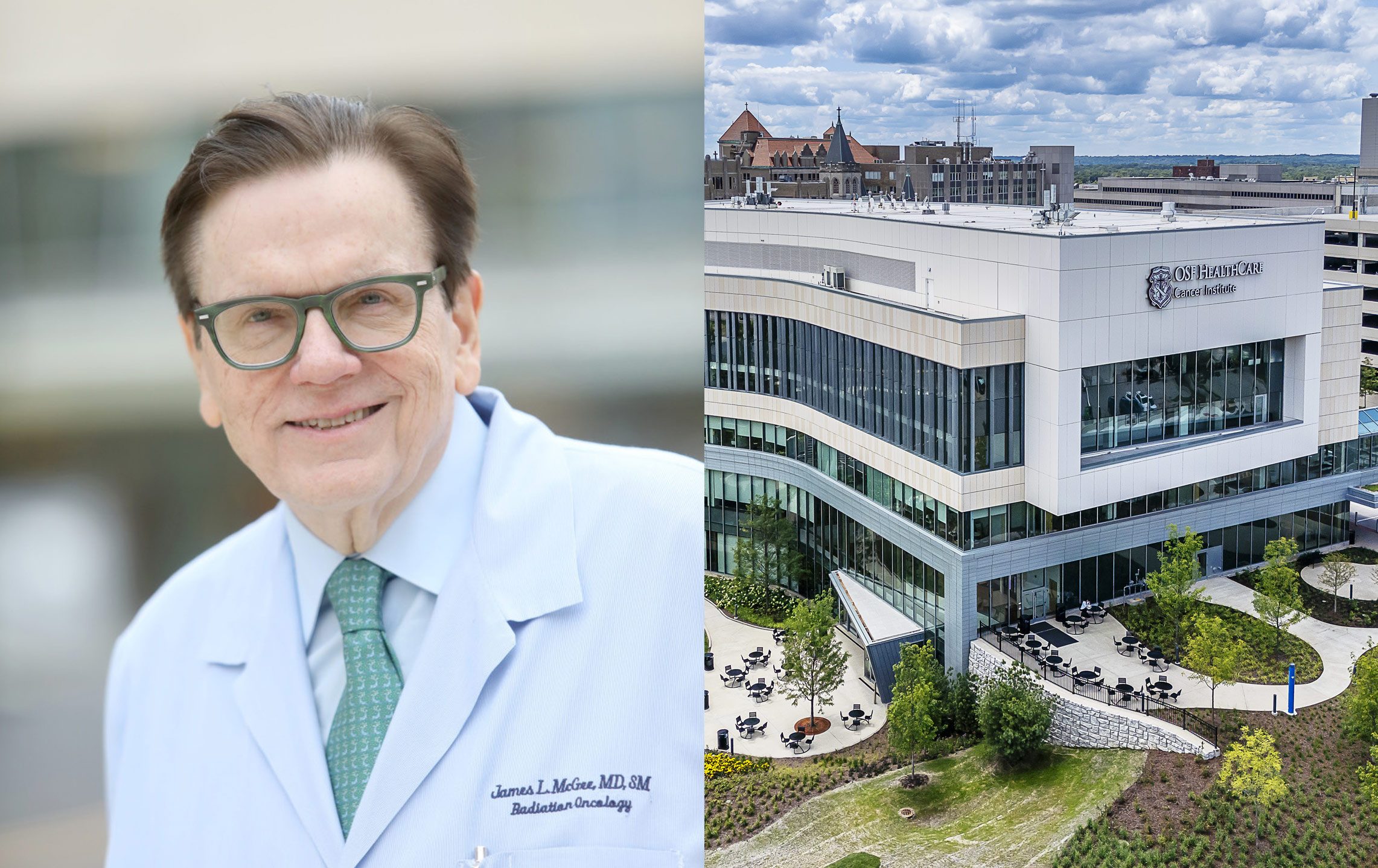
At OSF HealthCare Cancer Institute, our commitment to innovation is grounded in a singular purpose: to detect cancer earlier, treat it more effectively and ultimately save more lives. This calling is not theoretical – it is lived out each day through the integration of clinical excellence, advanced technology and a deep commitment to the patients and families we serve. Today, I am proud to share a milestone that reflects the extraordinary work of our teams and the power of our purpose in action.
In May, OSF Cancer Institute will be represented on one of the world’s most prestigious stages, the American Society of Clinical Oncology (ASCO) Annual Meeting in Chicago. Among more than 8,500 abstracts submitted from across the globe, our research was selected for oral presentation, an honor achieved by less than 1% of submissions.
Our study, “Implementing a centralized navigator-led and AI-assisted platform to improve lung cancer screening rates and early detection: A 6-year health system analysis,” led by Dr. Jun Zhang, vice president of Oncology Research, highlights a six-year transformation in lung cancer screening across our Ministry. Clinically, lung cancer remains the leading cause of cancer-related deaths, largely due to late-stage diagnosis. Increasing screening rates, particularly through low-dose CT (LDCT), is one of the most effective strategies to reduce mortality, yet national uptake has remained persistently low. By implementing a centralized, navigator-led model supported by artificial intelligence, we have more than doubled lung cancer screening rates significantly improving early detection, particularly in rural communities.
This model integrates AI-assisted identification of high-risk patients within the electronic health record with a dedicated navigation infrastructure thereby removing barriers for primary care providers while ensuring timely screening, follow-up and continuity of care. The result is a scalable, data-driven approach that closes critical gaps in access and equity.
This work is more than data, it represents lives changed. Between 2020 and 2025, our screening rates increased from 18.2% to 42.8%, dramatically outpacing the national average. This progression reflects a fundamental shift toward earlier-stage diagnosis where lung cancer is most treatable. and survival outcomes are significantly improved. Notably, our rural facilities experienced some of the greatest gains in Stage 1 detection, reinforcing our commitment to reducing geographic disparities in care.
To be selected for oral presentation at ASCO – attended by more than 40,000 oncology professionals from around the world – is a powerful affirmation that the work happening within OSF HealthCare Cancer Institute is leading the way in shaping the future of cancer care.
This recognition belongs to our physicians, researchers, navigators and care teams who relentlessly pursue better outcomes for our patients. It also belongs to you, our supporters and partners, whose belief in our Mission makes this level of innovation possible.
Together, we are not only advancing care, we are redefining what is possible, bringing hope to patients earlier in their journey, and setting a new standard for cancer care locally, nationally and around the world.
James L McGee, MD, MHCM, FACRO
President
OSF HealthCare Cancer Institute